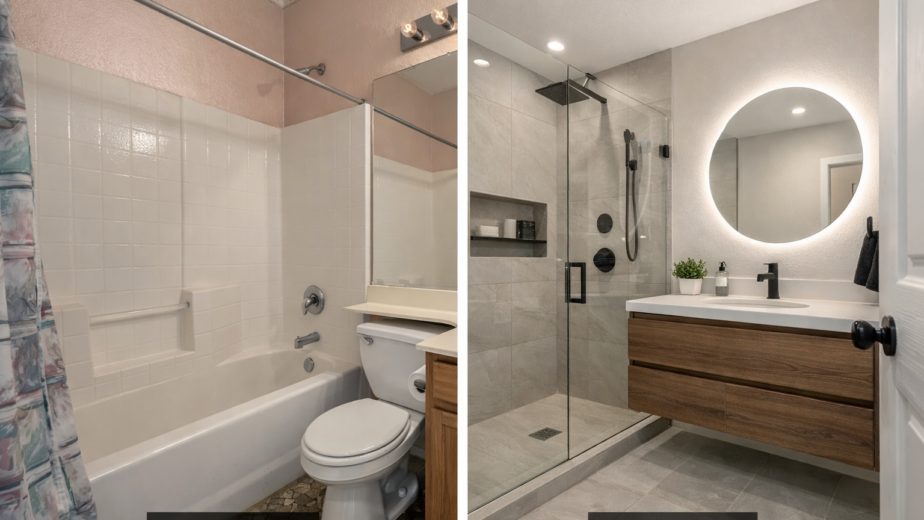
A typical full bathroom remodel in Phoenix runs in the mid tens of thousands of dollars for a mid-range project, based on TheFatBook’s Phoenix cost index. Smaller powder rooms start closer to a few thousand dollars, while a primary suite renovation with premium finishes can be significantly more expensive. Labor accounts for 40%–65% of the total budget, and Phoenix contractors typically embed a margin of roughly 19.7%, which explains why bids cluster in a predictable band rather than varying wildly.
Three things to do before you call anyone:
- Measure your bathroom and photograph the existing layout, fixtures, and any visible water damage.
- Decide whether you are doing a cosmetic refresh (tile, fixtures, vanity) or a structural remodel (moving plumbing, reconfiguring layout).
- Request three written, line-item quotes from licensed AZ ROC contractors and compare them scope-for-scope, not just total price.
Table of Contents
- How much does a bathroom remodel cost in Phoenix by size and tier?
- What drives bathroom remodel costs in Phoenix?
- What does a Phoenix bathroom remodel timeline look like?
- How do you compare bids and choose a reliable Phoenix contractor?
- What permits and licenses do Phoenix bathroom remodels require?
- How do Phoenix homeowners typically finance a bathroom remodel?
- What Phoenix-specific factors affect your remodel cost and material choices?
- How Az1builders approaches pricing and project delivery
- Key Takeaways
- What Phoenix remodelers see that homeowners often miss
- Get a free on-site estimate from Az1builders
- Useful sources for Phoenix bathroom remodel research
How much does a bathroom remodel cost in Phoenix by size and tier?
Phoenix homeowners generally fall into one of three budget tiers: budget, mid-range, or premium. The right tier depends on bathroom size, finish level, and whether any plumbing or electrical work needs to move. Per-square-foot costs run roughly $70–$250 nationally, and Phoenix tracks close to that band.
| Bathroom Type | Budget Tier | Mid-Range Tier | Premium Tier |
|---|---|---|---|
| Half/Powder (20–30 sq ft) | $3,500–$5,000 | $6,000–$8,000 | $10,000–$15,000 |
| Guest/Secondary (40–50 sq ft) | $7,000–$10,000 | $12,000–$18,000 | $20,000–$28,000 |
| Primary/Master (50–90 sq ft) | $12,000–$18,000 | $21,423–$26,997 | $30,000–$45,000 |
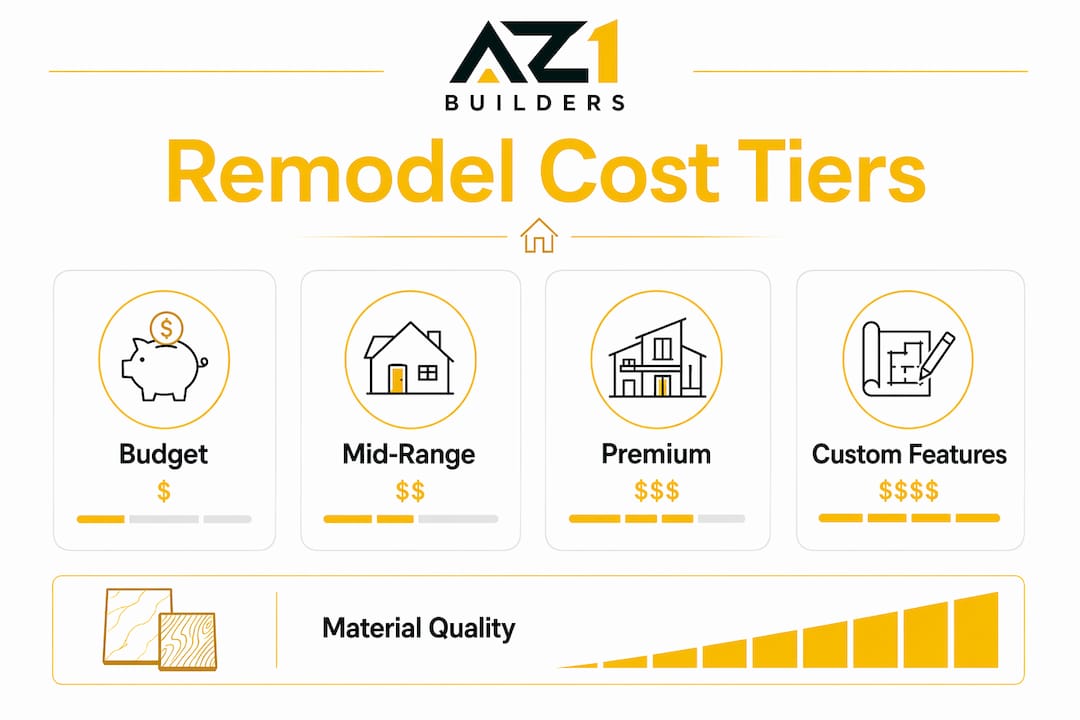
What each tier actually includes
Budget tier covers cosmetic work: a new vanity and faucet, basic ceramic tile, a standard toilet swap, fresh caulk and paint, and minimal demo. Plumbing stays where it is. Fixtures come from stock inventory at retailers like Home Depot, and labor hours are kept lean by limiting scope.
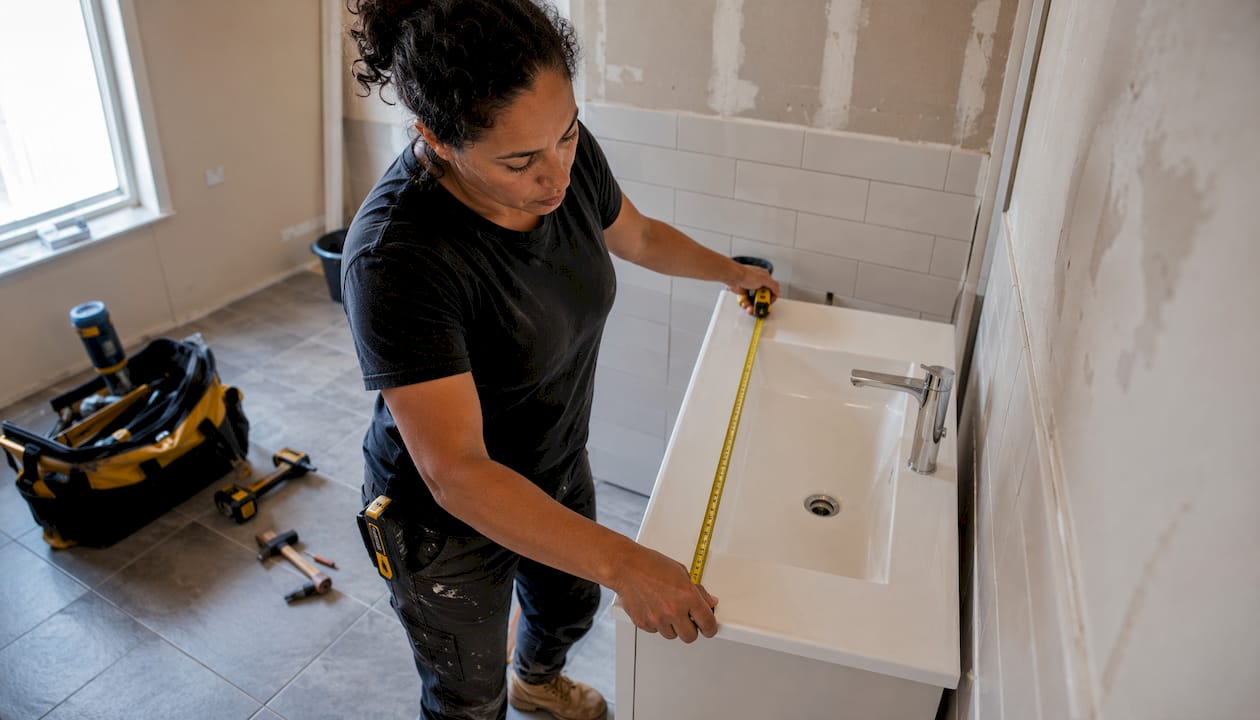
Mid-range tier is where most Phoenix homeowners land. Expect a full tub-to-shower conversion or tub replacement, porcelain tile on floors and walls, a semi-custom vanity with quartz or solid-surface countertop, updated lighting, a new toilet, and permit-covered plumbing connections. Demo, debris disposal, and permit fees are included in the quoted price.
Premium tier involves custom cabinetry, large-format porcelain or natural stone tile, a frameless glass shower enclosure, heated floors, designer fixtures, and often a layout change that requires moving supply and drain lines. These projects also tend to include design-build coordination and a longer construction window.
A note on per-square-foot estimates
A 50-square-foot guest bath at $150 per square foot produces a $7,500 materials-and-labor estimate, but that figure does not account for permit fees, debris disposal, or the fixed cost of mobilizing a crew. HomeCostCalc models a Phoenix example at roughly $7,951 total with a per-square-foot figure near $133 for a specific fixture and finish mix. Use per-square-foot numbers as a sanity check, not a final budget.
What drives bathroom remodel costs in Phoenix?
Labor is the single largest line item in any Phoenix bathroom remodel. Labor typically represents 40%–65% of the total project cost, covering licensed plumbers, electricians, tile setters, and general labor for demo and finish work. TheFatBook’s Phoenix cost-to-deliver model breaks a mid-range project down as follows: labor at $5,577, materials at $7,838, permit at $846, and overhead allocation at $5,098, totaling $19,359 before contractor margin.
The main cost drivers, ranked by typical impact:
- Labor hours and trade mix. Adding a licensed plumber to move a drain line or a licensed electrician to add a GFCI circuit raises costs faster than almost any material upgrade.
- Plumbing rework. Keeping fixtures in their existing locations is the single most reliable way to hold a budget. Moving a toilet or shower drain can add $1,500–$4,000 depending on slab access.
- Tile selection and layout. Large-format tile, natural stone, or complex patterns (herringbone, diagonal) require more cuts, more labor hours, and more waste allowance. Standard 12×24 porcelain is the cost-efficient choice for Phoenix bathrooms.
- Custom cabinetry vs. stock. A stock vanity from a home improvement retailer runs $300–$800 installed. A semi-custom or fully custom cabinet can reach $2,500–$6,000 for the same footprint.
- Demo and behind-wall conditions. Demolition alone can add $1,000–$2,300 to the budget, and that figure does not include repairs to water-damaged substrate, corroded pipes, or outdated wiring uncovered during demo.
- Finish level. Upgrading from builder-grade to mid-range fixtures (faucets, showerhead, toilet) typically adds $800–$2,000 in materials alone.
- Permits. Permits commonly vary in cost depending on scope; a full remodel with plumbing and electrical work sits toward the higher end of that range.
What does a Phoenix bathroom remodel timeline look like?
A realistic mid-range bathroom remodel in Phoenix typically takes several weeks from signed contract to final walkthrough, though premium projects with custom orders or layout changes can take longer. Here is a phase-by-phase breakdown:
- Design and estimates (1–2 weeks). Scope definition, fixture and tile selection, and written quote finalization. Decisions made here determine whether the project stays on schedule; delayed selections are the most common cause of timeline slippage.
- Permitting (1–3 weeks). The City of Phoenix and surrounding jurisdictions process permits at different speeds. Simple cosmetic permits can clear in a few days; plumbing and electrical permits for a full remodel typically take 1–3 weeks. Your contractor pulls the permit; you should confirm it is issued before demo begins.
- Demolition (1–3 days). Removal of existing tile, fixtures, vanity, and drywall. This phase often reveals behind-wall conditions that require immediate decisions on scope and budget.
- Rough-in plumbing and electrical (2–5 days). New supply and drain lines, GFCI outlets, exhaust fan wiring, and any lighting circuits. Inspections are scheduled at the end of this phase before walls close.
- Inspections (1–3 days, variable). City inspectors must sign off on rough-in work before backer board and tile can proceed. Scheduling an inspection in Phoenix typically requires 1–2 business days’ notice.
- Backer board, waterproofing, and tile (4–8 days). Cement board or equivalent moisture-resistant backer, waterproofing membrane in wet areas, and tile installation. Large-format tile and complex layouts add time.
- Finish plumbing and fixtures (1–2 days). Toilet, vanity, faucets, showerhead, and accessories set after tile is grouted and cured.
- Final inspection, punch list, and cleanup (2–4 days). Final permit inspection, touch-ups, grout sealing, and debris removal.
Seasonal note: Phoenix contractor demand peaks in October through March, when the weather is mild and homeowners are most active. Scheduling a remodel during summer (June through August) can sometimes reduce wait times for crews, though material lead times from suppliers are not seasonal. Build in a 1–2 week contingency buffer for permit delays or unforeseen repairs regardless of when you schedule.
How do you compare bids and choose a reliable Phoenix contractor?
Getting three written quotes is the baseline, but comparing them correctly is what protects your budget. A lower total price means nothing if one bid excludes demo, permits, or tile labor that the others include.
Every valid bid should contain:
- Full scope of work, written in plain language (what is included and what is explicitly excluded)
- Line-item labor costs by trade (plumber, electrician, tile setter, general labor)
- Materials list with allowances for fixtures, tile, and vanity (or specific product specs)
- Permit fees as a separate line item
- Project start date, phase milestones, and estimated completion date
- Payment schedule tied to milestones, not arbitrary dates
- Change-order process in writing, including how cost increases are approved
- Proof of AZ ROC license number and current general liability and workers’ compensation insurance
To compare quotes line by line, build a simple spreadsheet with each line item as a row and each contractor as a column. Where one bid uses a lump sum and another itemizes, ask the lump-sum bidder to break it out. Fixture allowances are a common place where bids diverge: a $500 fixture allowance and a $1,500 allowance for the same item produce very different final costs.
Red flags to watch for:
- A bid significantly below the Phoenix market floor of $21,423 for a full bath without a clear explanation of what was excluded
- Vague scope language (“bathroom renovation as discussed”) with no line items
- A request for more than 30% upfront before any work begins, with no milestone schedule attached
- No AZ ROC license number provided or a license that does not verify on the AZ ROC website
- Pressure to sign quickly or skip the permit process
Pro Tip: Ask each contractor to estimate the labor hours by trade for your project. A mid-range Phoenix bathroom typically involves 40–80 total labor hours across all trades. If a bid implies far fewer hours at the same or higher hourly rates, ask where the time savings come from — it usually means scope was quietly omitted.
Negotiation tends to be most productive on fixture allowances (you can source your own fixtures and deduct the allowance), demo labor (sometimes reducible if you handle minor prep work yourself), and tile selection (switching from a premium to a mid-range tile can save $400–$1,200 in materials alone).
What permits and licenses do Phoenix bathroom remodels require?
Most full bathroom remodels in Phoenix require at least a building permit, and projects involving plumbing or electrical changes require trade-specific permits as well. Permit costs commonly range from $100 to $1,000 depending on scope; a full remodel with plumbing and electrical work sits at the higher end of that range.
Key permit and licensing points for Phoenix homeowners:
- Building permit: Required for structural changes, layout modifications, or any work that alters the existing footprint. Your contractor pulls this permit; it should be posted at the job site.
- Plumbing permit: Required when supply or drain lines are added, moved, or replaced. A licensed plumber must perform the work and schedule a rough-in inspection before walls close.
- Electrical permit: Required for new circuits, GFCI outlet additions, exhaust fan wiring, or lighting changes. A licensed electrician handles this work and the associated inspection.
- AZ ROC verification: Before signing any contract, verify the contractor’s license on the Arizona Registrar of Contractors website. Confirm the license is active, covers the correct trade classification, and that no disciplinary actions are on record.
- Insurance verification: Request a certificate of general liability insurance and workers’ compensation coverage. An uninsured crew working in your home creates personal liability exposure.
- City of Phoenix permit portal: The City of Phoenix offers an online permit tracking system where homeowners can confirm permit status and scheduled inspections. If your project is in Goodyear, Avondale, Surprise, or another West Valley city, check that jurisdiction’s portal directly.
Cosmetic-only work (painting, replacing a faucet, swapping a toilet with no drain changes) generally does not require a permit. When in doubt, ask your contractor to confirm in writing whether a permit is required for your specific scope.
How do Phoenix homeowners typically finance a bathroom remodel?
Most Phoenix homeowners pay for bathroom renovations through one of five channels, each with different cost implications and risk profiles.
- Cash or savings. No interest, no approval process, and full negotiating leverage with contractors. The cleanest option when the budget is available.
- Home equity line of credit (HELOC). Draws against existing home equity at variable interest rates. Rates vary with market conditions; consult your lender for current terms. Works well for phased projects where you draw only what you spend.
- Home equity loan. A fixed-rate lump sum secured by your home. Predictable monthly payments make budgeting straightforward, though closing costs add to the total.
- Personal loan. Unsecured, faster to fund than a HELOC, but typically carries higher interest rates. Useful when equity is limited or the project timeline is short.
- Contractor financing. Some contractors offer in-house or third-party financing programs. Review the APR and terms carefully; promotional zero-interest periods often convert to high rates if the balance is not paid in full.
- Credit cards. Practical for small purchases (fixtures, accessories) but not advisable as the primary funding source for a $15,000+ project given typical APRs.
On payment schedules: a reasonable contractor will ask for a modest deposit (typically 10%–20%) to secure the schedule and order materials, with progress draws tied to completed milestones (rough-in complete, tile complete, final walkthrough). Avoid any arrangement that requires 50% or more upfront before work begins. A clear, milestone-based payment schedule protects both parties and keeps the project moving.
If the full scope exceeds your current budget, phasing the project is a legitimate strategy. Completing the shower and tile work now, then returning for a vanity upgrade in 12 months, avoids over-extending finances while still improving the space.
What Phoenix-specific factors affect your remodel cost and material choices?
Phoenix’s climate and growth trajectory create a few considerations that do not apply in most other markets.
Material durability in the Valley. Extreme heat and hard water are the two conditions that shorten material life in Phoenix bathrooms. Porcelain tile outperforms ceramic in high-heat environments and resists the mineral etching that hard water causes on softer surfaces. Cement board or equivalent moisture-resistant backer board is non-negotiable behind any wet area; standard drywall fails quickly in Phoenix’s humidity spikes during monsoon season. Water-efficient fixtures (WaterSense-labeled toilets and faucets) reduce utility costs and align with local water conservation requirements.
Contractor availability and seasonal demand. Phoenix contractor demand peaks between October and March. Scheduling a project during that window means longer lead times for crew availability, sometimes 4–8 weeks out from first contact. Summer scheduling can reduce wait times, though it requires planning for crews working in high temperatures. Either way, locking in your contractor and ordering special-order materials before you need them is the most reliable way to hold your timeline.
Local material sourcing. Phoenix has strong local inventory at major home improvement retailers and regional tile distributors, which means standard porcelain tile, stock vanities, and common fixture lines are typically available without extended lead times. Special-order items (custom tile formats, imported stone, designer fixture lines) can add 4–8 weeks to the schedule and sometimes carry freight surcharges. Phoenix mid-range numbers track about 1.2% below the national average in TheFatBook’s index, which reflects the local supply chain’s relative efficiency for standard materials.
Pro Tip: When selecting tile, confirm with your supplier that the full quantity you need is in stock at the local distribution center before your contractor schedules demo. Running out mid-project and waiting for a restock is one of the most avoidable causes of timeline delays in Phoenix remodels.
How AZ1 builders approaches pricing and project delivery
Az1builders is a licensed Arizona general contractor serving homeowners throughout the West Valley and Greater Phoenix area, including Goodyear, Avondale, Buckeye, Surprise, and Phoenix. Their bathroom remodeling process is built around written, line-item estimates and transparent project management from the first site visit through final cleanup.
What homeowners can expect when working with Az1builders:
- Free on-site estimate. A project manager visits the bathroom, takes measurements, reviews the existing plumbing and electrical layout, and discusses scope and finish preferences before any numbers are put on paper.
- Line-item written quote. The estimate breaks out labor by trade, materials with specific product allowances, permit fees, demo, and debris disposal so homeowners can compare it against other bids scope-for-scope.
- AZ ROC licensing. Az1builders holds an active Arizona Registrar of Contractors license, which homeowners can verify independently before signing a contract.
- Clear timeline with milestones. Each project includes a written schedule with phase milestones and a defined change-order process so cost increases require written approval before work proceeds.
- Portfolio and references. Before-and-after photos of completed Phoenix-area bathrooms and references from past clients are available to help homeowners evaluate craftsmanship and project management quality.
- Permit handling. Az1builders pulls the required permits and coordinates inspections, so homeowners do not need to manage that process independently.
To prepare for an on-site estimate, gather the bathroom dimensions, photos of the existing space, a list of what you want to change, and any fixture or tile samples you have already selected. The more specific the scope going into the estimate, the more accurate the written quote will be, and the fewer change orders arise during construction.
Key Takeaways
A mid-range Phoenix bathroom remodel averages $24,107, with TheFatBook noting a realistic market floor of $21,423 and a fair range up to $26,997 for most projects. Labor drives 40%–65% of the budget, and reserving a 10%–20% contingency for behind-wall surprises is standard practice for any full renovation.
| Point | Details |
|---|---|
| Phoenix mid-range average | TheFatBook’s index puts the city average at $24,107, with a realistic floor of $21,423 and a typical range up to $26,997. |
| Labor dominates the budget | Labor typically accounts for 40%–65% of total cost across plumbing, electrical, and tile trades. |
| Contingency is not optional | Behind-wall surprises commonly require an extra 10%–20% contingency beyond the quoted price. |
| Bids below the floor deserve scrutiny | Quotes significantly below $21,423 for a full bath often omit scope, use lower-skilled crews, or carry unstated allowances. |
| Az1builders next step | Az1builders offers free on-site estimates with line-item written quotes for Phoenix-area homeowners ready to move forward. |
What Phoenix remodelers see that homeowners often miss
The most common mistake Phoenix homeowners make is treating the written quote as the final number. It rarely is, and not because contractors are being deceptive. Behind-wall conditions in older Valley homes frequently include corroded copper supply lines, water-damaged cement board from a previous tile job, or outdated wiring that does not meet current code. None of that is visible until demo begins, and all of it costs money to fix.
The second mistake is accepting a fixture allowance without understanding what it actually buys. A $500 allowance for a shower valve and trim kit sounds reasonable until you price the specific product you want and find it costs $900. That $400 gap becomes a change order, and change orders add up quickly on a project with five or six fixture selections.
Written line-item estimates and a clearly defined change-order policy are not bureaucratic formalities. They are the mechanism that keeps a $24,000 project from quietly becoming a $30,000 one. Any contractor who resists putting the scope in writing is telling you something important about how they manage surprises.
Get a free on-site estimate from Az1builders
Homeowners in the Greater Phoenix area who are ready to move from research to a real number have a direct path forward with Az1builders. The process starts with a free on-site visit where a project manager reviews your bathroom, takes measurements, discusses your scope and finish preferences, and identifies any conditions that could affect the budget before a quote is written.
Az1builders follows up with a written, line-item estimate that breaks out labor by trade, materials, permit fees, demo, and debris disposal, so you can compare it against other bids with confidence. The team serves Goodyear, Avondale, Buckeye, Surprise, Phoenix, and the surrounding West Valley communities. Response time for estimate scheduling is typically within one to two business days.
To schedule your free estimate, visit Az1builders and submit a request with your project details and preferred contact time. A licensed project manager will follow up to confirm the appointment.
Useful sources for Phoenix bathroom remodel research
These are the primary data sources and local resources used to build this guide. Each one offers something specific for homeowners who want to verify numbers or dig deeper before hiring.
- TheFatBook Phoenix cost index: The most detailed local benchmark available, with a modeled cost-to-deliver breakdown, contractor margin analysis, and the $24,107 city average used throughout this guide.
- TheFatBook national stats: Useful for comparing Phoenix pricing against national averages and understanding how local market dynamics affect contractor margins.
- NerdWallet bathroom remodel cost guide: Covers per-square-foot ranges, labor share benchmarks, permit cost ranges, and the 30% resale-value guideline for homeowners weighing ROI.
- HomeCostCalc Phoenix calculator: A free online calculator that models Phoenix-specific estimates based on fixture and finish inputs; useful for a quick sanity check before requesting contractor quotes.
- Arizona Registrar of Contractors (AZ ROC): The official state database for verifying contractor license status, trade classification, and disciplinary history. Check every contractor here before signing a contract.
- City of Phoenix permit portal: Use the city’s online system to confirm permit status and scheduled inspections for your project. Homeowners in Goodyear, Surprise, or Avondale should check their respective city portals.